
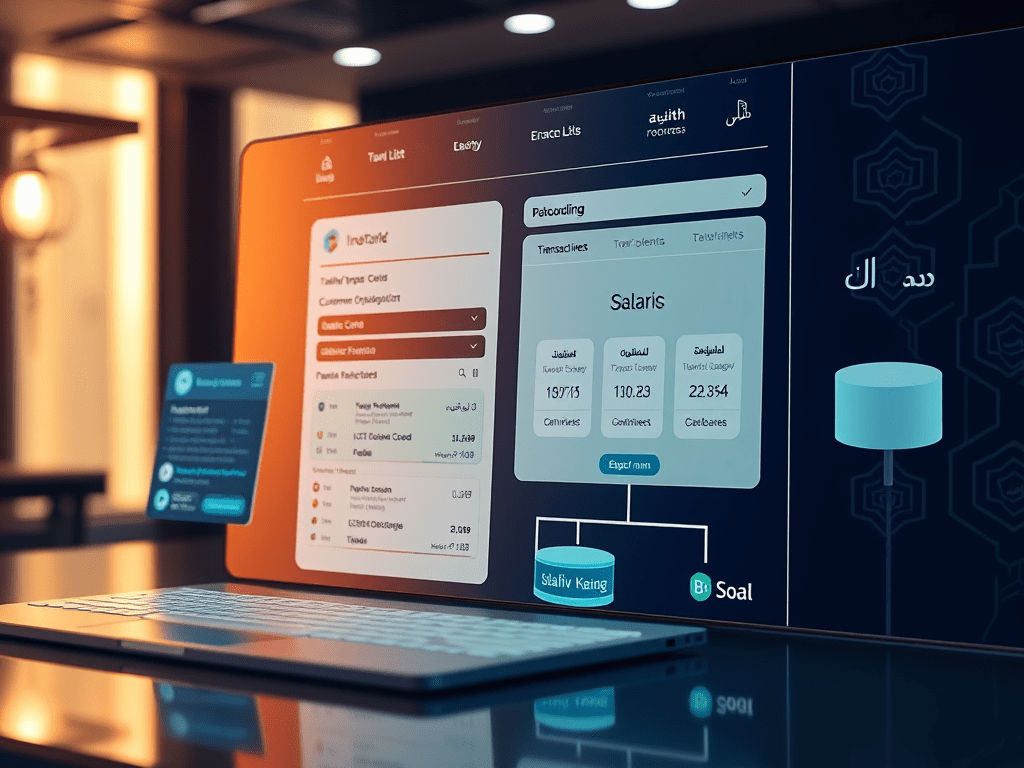
Islamic finance is one of the fastest‑growing sectors in global banking — yet high‑quality, open‑source systems that model real Sharia‑compliant workflows are rare. To bridge that gap, I built a Sharia‑Compliant Banking Management System (SCBMS): a fully structured PostgreSQL backend that models Islamic banking operations with accuracy, automation, and transparency.
This post walks through the key ideas behind the project, the architecture, and some of the SQL powering it.
🌐 Why Build a Sharia‑Compliant Banking System?
Islamic finance operates on principles fundamentally different from conventional banking:
- No interest (riba)
- No uncertainty (gharar)
- No prohibited activities
- Profit‑loss sharing
- Asset‑backed financing
Designing a system that respects these rules requires more than tables — it requires business logic, automation, and auditability.
That’s where PostgreSQL shines.
🏗️ System Architecture at a Glance
The system is built using a layered architecture that mirrors real banking backends:
Database Layer
- customers
- accounts
- transactions
- murabahacontracts
- ijaracontracts
- mudarabainvestments
- zakatcalculations
Stored Procedures
- calculate_zakat()
- generate_murabaha_payment_plan()
- generate_ijara_schedule()
Triggers
- audit_prohibited_transactions
- update_account_balance
Views
- CustomerPortfolioView
- ZakatSummaryView
Future API Layer
- REST endpoints
- authentication
- business logic services
This structure makes the system scalable, maintainable, and ready for integration with Python, Node.js, or a full web application.
Example: Creating a Customer and Opening Accounts
Here’s a simple SQL snippet that demonstrates how the system handles customer onboarding:
INSERT INTO islamic_finance.customers
(full_name, national_id_or_passport, date_of_birth, customer_type, email, phone_number, zakat_eligible)
VALUES
(‘Demo User’, ‘A123456789’, ‘1990-01-01’, ‘Individual’, ‘demo@example.com’, ‘555-1234’, TRUE)
RETURNING customer_id;
Automating Murabaha Financing
Murabaha is a cost‑plus financing model where the bank buys an asset and sells it to the customer at a profit.
The system includes a stored procedure that automatically generates the payment schedule:
CALL islamic_finance.generate_murabaha_payment_plan(1, 6);
Real‑Time Shariah Compliance with Triggers
Triggers enforce rules automatically:
- audit_prohibited_transactions logs any suspicious activity
- update_account_balance keeps balances accurate
- log_shariah_violations ensures transparency
This mirrors how real Islamic banks maintain compliance.
Bonus: Python Integration
To demonstrate full‑stack capability, the project includes a small Python script that connects to PostgreSQL and runs queries:
cur.execute(‘SET search_path TO islamic_finance, public;’)
cur.execute(‘SELECT full_name, email FROM customers LIMIT 5;’)
Final Thoughts
This project is more than a database — it’s a complete Islamic banking backend, built with:
- Clean architecture
- Real business logic
- Automated compliance
- Expandability for future APIs
It demonstrates how modern engineering can support ethical, Sharia‑compliant financial systems.
If you’re exploring Islamic finance, backend engineering, or database architecture, this project is a powerful foundation to build on.
Here is my github project link:
https://github.com/NemahAlsayed/Sharia-Compliant-Banking-Management-System-SCBMS-
To request any project ideas from me in open source SQL, please contact me. I do technology related blog posts. I post the source code on Github.
 NDesignstudyosu
Leave a comment